A local guide · Northwest Arkansas
Living in Fayetteville,
Arkansas.
Explore the places, home choices and everyday tradeoffs that can help you decide where to look in Fayetteville.
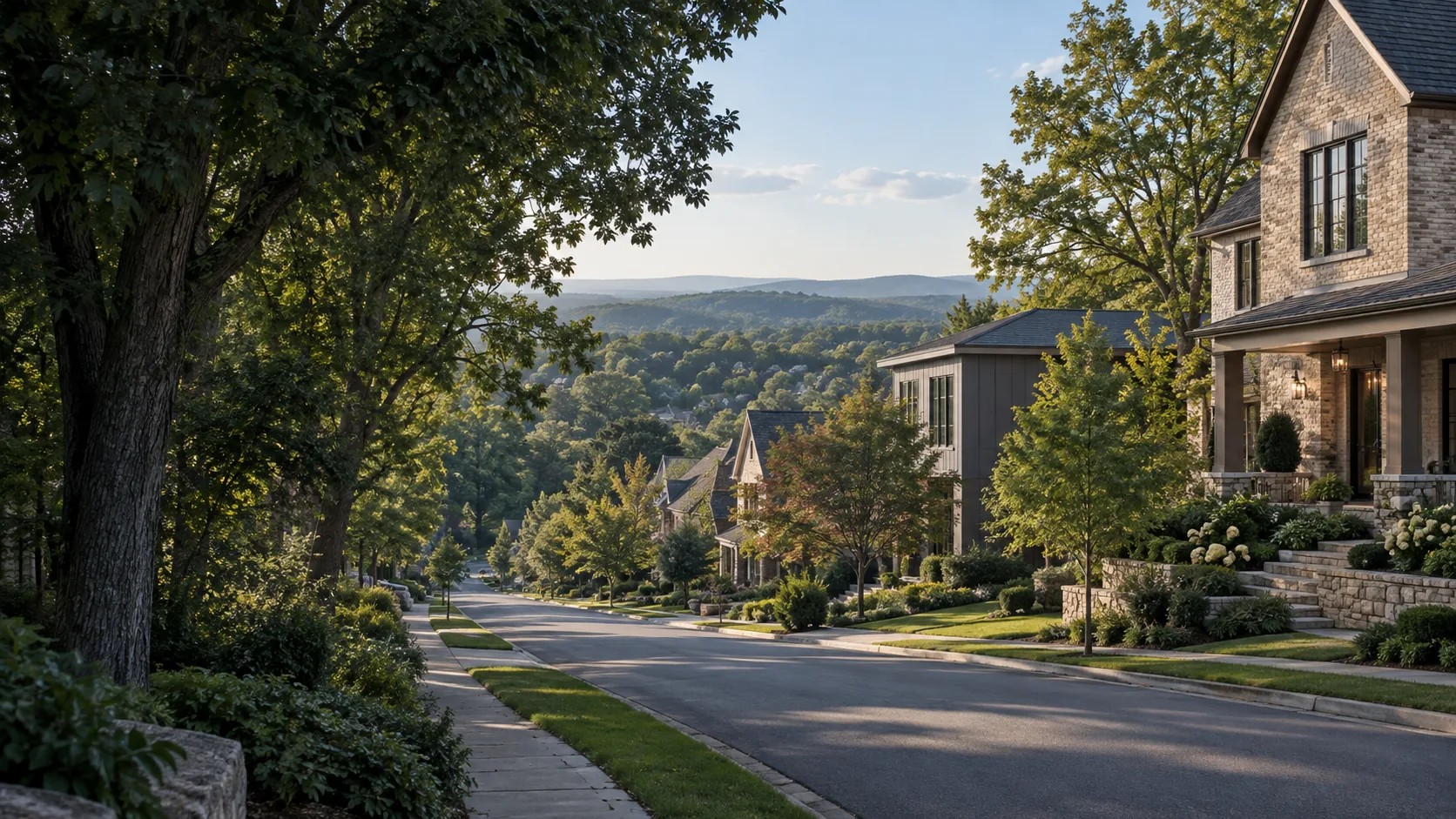
Fayetteville-inspired scene · AI-generated
The city
Campus, downtown
and the outdoors.
Fayetteville sits at the southern end of Northwest Arkansas’s main city corridor, with I-49 connecting it north to Springdale, Rogers and Bentonville. The University of Arkansas, the Downtown Square and Dickson Street give you places to return to for a game, a performance or dinner. Lake Fayetteville, Gulley Park and Kessler Mountain offer very different ways to spend time outside.
Compare Fayetteville with other Northwest Arkansas communitiesEveryday life
Is Fayetteville, Arkansas, a good place to live?
Fayetteville can be a good fit if you want access to parks, trails, local restaurants and University of Arkansas events. You can look for a home close to downtown and campus, or explore other parts of town based on where you work and what you like to do.
The best location depends on your daily routine. Being close to campus may make games and events easier to reach, but you should also consider traffic, parking and activity around the property. A home farther away may offer different space and price options, with a longer drive to the places you visit most.
Before deciding, spend time in the areas you’re considering during a normal weekday and on a busy weekend. Visit the grocery store, drive to work and check the route to your favorite park or trail. Those everyday trips can tell you more than one showing.
Plan your budget
What does it cost to live in Fayetteville?
Start with the home, but look beyond the asking price. Your monthly housing cost may include a mortgage payment, property taxes, homeowners insurance and HOA dues, along with utilities and regular maintenance.
Compare those costs for the actual properties you’re considering. Ask for available utility history, get an insurance quote and review any HOA fees and rules. If you’re looking at an older home, pay attention to the roof, heating and cooling equipment, windows and other items that may need work.
Transportation matters too. A lower-priced home may come with a longer drive, so think about the time and fuel involved in your regular trips. If you’ll work in Bentonville or Rogers, test the commute at the times you expect to travel.
Whether Fayetteville feels affordable will depend on your budget, the type of home you want and where you’re moving from. Comparing a few real properties will give you a more useful answer than relying on one citywide cost-of-living number.
Start exploring
Which part fits your day?
These are starting points for a visit, not neighborhood boundaries. Use the streets and landmarks to get oriented, then look more closely at each home.
Downtown & near campus
Dickson Street,
the Square & Wilson Park
Dickson Street brings restaurants, live music and the Walton Arts Center close to the University of Arkansas. The Downtown Square adds shops and the farmers market. For a closer look at Fayetteville’s older residential streets, include Wilson Park and Washington-Willow in your visit.
If walking to dinner is part of the appeal, walk from an actual home you’re considering. Notice hills, crossings and evening activity. Around campus, check parking and game-day routes as well as your ordinary weekday trip.
Browse Downtown Fayetteville properties or homes around Wilson Park.
University game-day parking informationNorth Fayetteville
Lake Fayetteville
& the Razorback Greenway
Lake Fayetteville offers paved and natural-surface trails, with access through several park areas. Together with the Razorback Greenway, it gives you a different starting point from a search centered on downtown.
If you picture a walk or ride after work, find the entrance you’d use from the house. If work takes you north, test the full drive to your workplace, including the streets between home and I-49.
Lake Fayetteville park and trail informationEast Fayetteville
Gulley Park,
Old Wire & Crossover
Gulley Park sits between Township Street and Old Wire Road. Its paved loop, open space and summer concerts make it a useful stop while exploring the east side. Continue toward Crossover Road to compare the streets and homes around the places you expect to use.
For a home near the park, check the route to the entrance and any road crossings. Then try the trip to groceries or work. Two homes with the same distance to the park can give you different everyday routines.
Gulley Park informationWest & southwest Fayetteville
Wedington, Rupple
& Kessler Mountain
Start with homes around Wedington and Rupple, then compare how each address connects to campus, I-49 and the rest of town.
For outdoor time, explore Centennial Park at Millsap Mountain and Kessler Mountain Regional Park. Kessler has sports fields and natural-surface trails, plus the paved Cato Springs Trail connection. These parks are separate destinations; check which entrance you’d actually use from a particular home.
City park and trail mapsHome choices
Compare the home.
And what comes with it.
Fayetteville’s historic districts are one reason to look closely at older homes. As you compare those with newer construction or a condo, give the upkeep, space and ownership details as much attention as the finishes.
Older homes
The city’s historic-property map includes Wilson Park, Washington-Willow and Mount Nord. Use it to explore the buildings and streets, then ask about the specific home’s repairs, systems, drainage and any renovation you have in mind.
Browse Historic District properties Historic Fayetteville maps and informationNewer construction
Compare the finished home and lot, not only the floor plan. Ask what the price includes, what remains to be completed and whether nearby construction or neighborhood rules could affect how you use the property.
Condos & townhomes
Look at parking, outdoor space and the ownership documents. Confirm who maintains what, along with any dues or use restrictions. A smaller home doesn’t automatically mean fewer responsibilities.
Before you decide
Try the weekday, too.
Leave time between showings for the parts of life a listing photo can’t show.
Drive your work route
Start at the house when you’d normally leave. If your trip crosses town to reach I-49, test that part of the drive too. If your destination is campus, include parking and the walk to your building. If it’s farther north, test that specific trip rather than relying on a city-to-city estimate.
Walk to one place you’d use
Choose a park entrance, coffee shop or trail connection. Notice the slope and crossings, and whether the route continues all the way there. A recreational path may not take you to your everyday errands.
Check the exact address
Confirm the services, school assignment if relevant, and any property or neighborhood rules that matter to you. Start with Fayetteville Public Schools for district questions; confirm the district serving the property rather than assuming a Fayetteville mailing address settles it.
Moving checklist
Before you move to Fayetteville
- Set a housing budget that includes taxes, insurance, utilities and maintenance.
- Compare several areas based on your work and everyday stops.
- Visit during different times of day, including a busy weekend.
- Verify school attendance boundaries for the specific property if they matter to your household.
- Review HOA rules and any property-use restrictions that affect your plans.
- Explore the homes available now, then compare what each location offers for your budget.
Your next step
See what’s available
in Fayetteville.
Use the map, price and property filters to compare current listings. If you’re still weighing areas, tell The Moldenhauer Group where you’ll work and what you’d like nearby. We can help you plan where to look.