


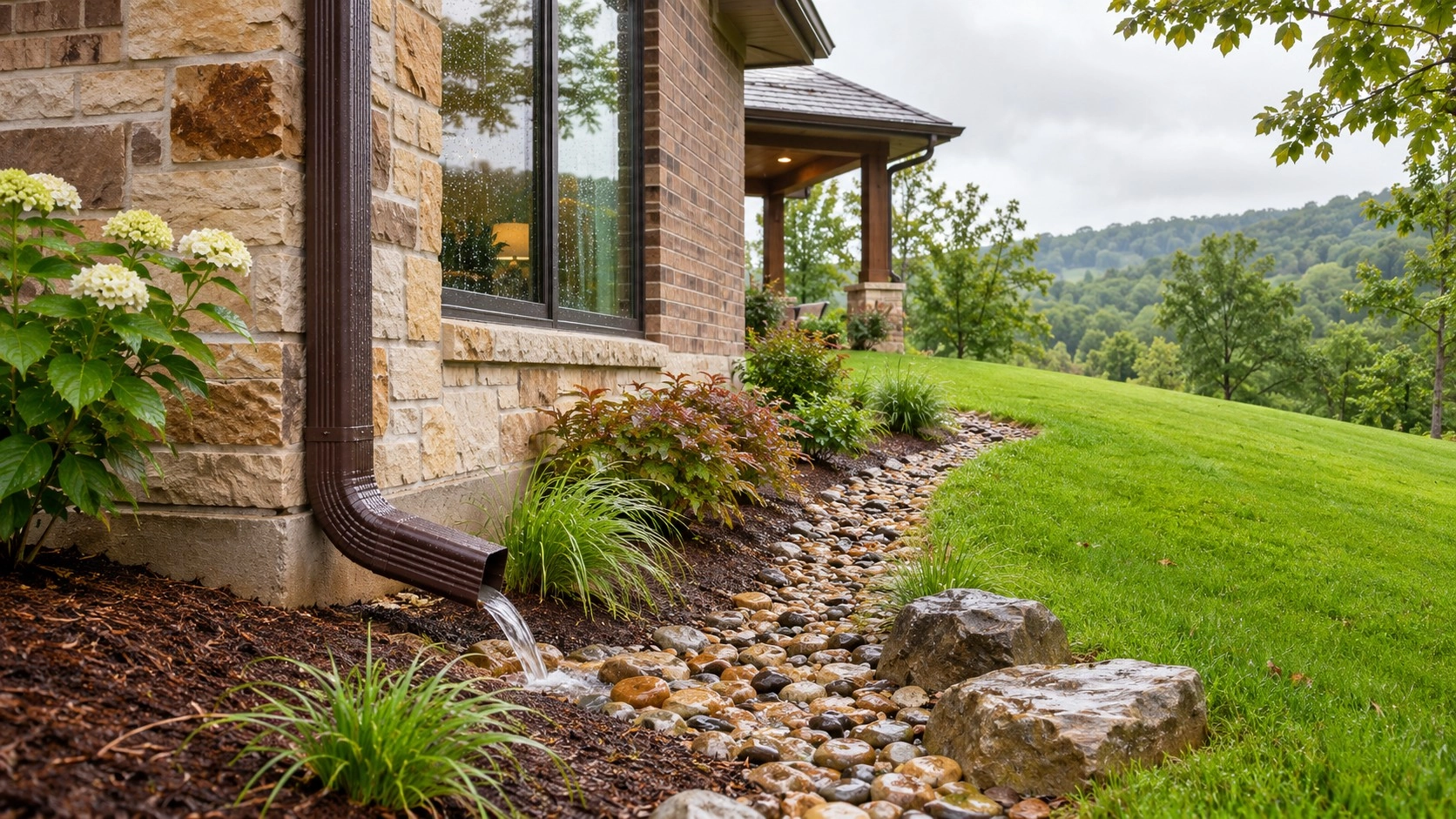
A backyard can look completely different after a heavy rain. Before buying a Northwest Arkansas home, take time to understand where water goes, what the property's records show, and what insurance will cost. A pretty creek, level yard, or dry showing day does not answer those questions.
This is not about ruling out an entire neighborhood. It is about checking the specific property so you know what you are buying and which questions still need a qualified answer.
Start with the official flood information
The National Flood Insurance Program explains flood zones and maps and directs buyers to official mapping resources. Check the address, parcel, and building location rather than relying only on a listing's description.
For a Fayetteville property, the city's Floodplain Management page provides local resources and a contact for questions. Bentonville has its own floodplain-management guidance. For other cities or unincorporated areas, ask the appropriate local floodplain administrator which maps and records apply.
A map is an important starting point, not a promise that flooding cannot occur. Ask about map revisions, the location of the structure relative to the mapped area, and any property-specific documents that need professional interpretation.
Look beyond the mapped boundary
Drainage problems are not limited to homes beside a river. Ask how runoff moves across the lot and where downspouts discharge. Observe slopes, retaining walls, low spots, drainage channels, driveway crossings, and the relationship between the house and neighboring ground.
Look for signs that deserve investigation: water stains, repeated patching, a musty smell, erosion, standing water, or a crawl space that could not be accessed. None proves the full cause by itself. Your inspector can help identify when a drainage, structural, or other specialist should evaluate the property.
Do not enter moving water or unsafe areas to investigate. A safe visit after rain can provide context, but it does not replace records or professional evaluation.
Ask about history and previous work
Review available seller disclosures and ask specific questions about water entry, flooding, drainage changes, and repairs. Request invoices, permits where applicable, warranties, and descriptions of the work. A repaired stain tells you less than a clear explanation of what caused it and how the cause was addressed.
If a seller does not know, keep that answer marked as unknown. A recently painted wall or a statement that the home has been dry during the current owner's occupancy is not a guarantee about future conditions.
For rural properties, include access roads, culverts, outbuildings, and usable land in your review. Our home-with-land buying guide covers additional due-diligence questions.
Get insurance answers while you still have time
Standard homeowners insurance generally does not cover flood damage. The National Association of Insurance Commissioners explains the distinction between homeowners and separate flood coverage.
Ask a licensed insurance professional for property-specific quotes, deductibles, exclusions, coverage limits, and the date coverage can begin. Ask separately about water backup or other water-related risks because policies do not treat every source of water the same way.
Confirm the lender's requirements as well. Whether coverage is required is a different question from whether purchasing it is sensible for your risk and budget. Do not wait until the day before closing to discover the premium or a coverage issue.
Check planned changes before assuming they are allowed
If you want to build an addition, add a shop, change the driveway, or reshape the yard, ask the local authority about the required approvals. A property that works for its current use may not support the project you have in mind.
Put unresolved questions beside your contract deadlines and decide what information is essential before proceeding. Contact The Moldenhauer Group to organize your Northwest Arkansas home search and connect the property questions with the right professionals.