


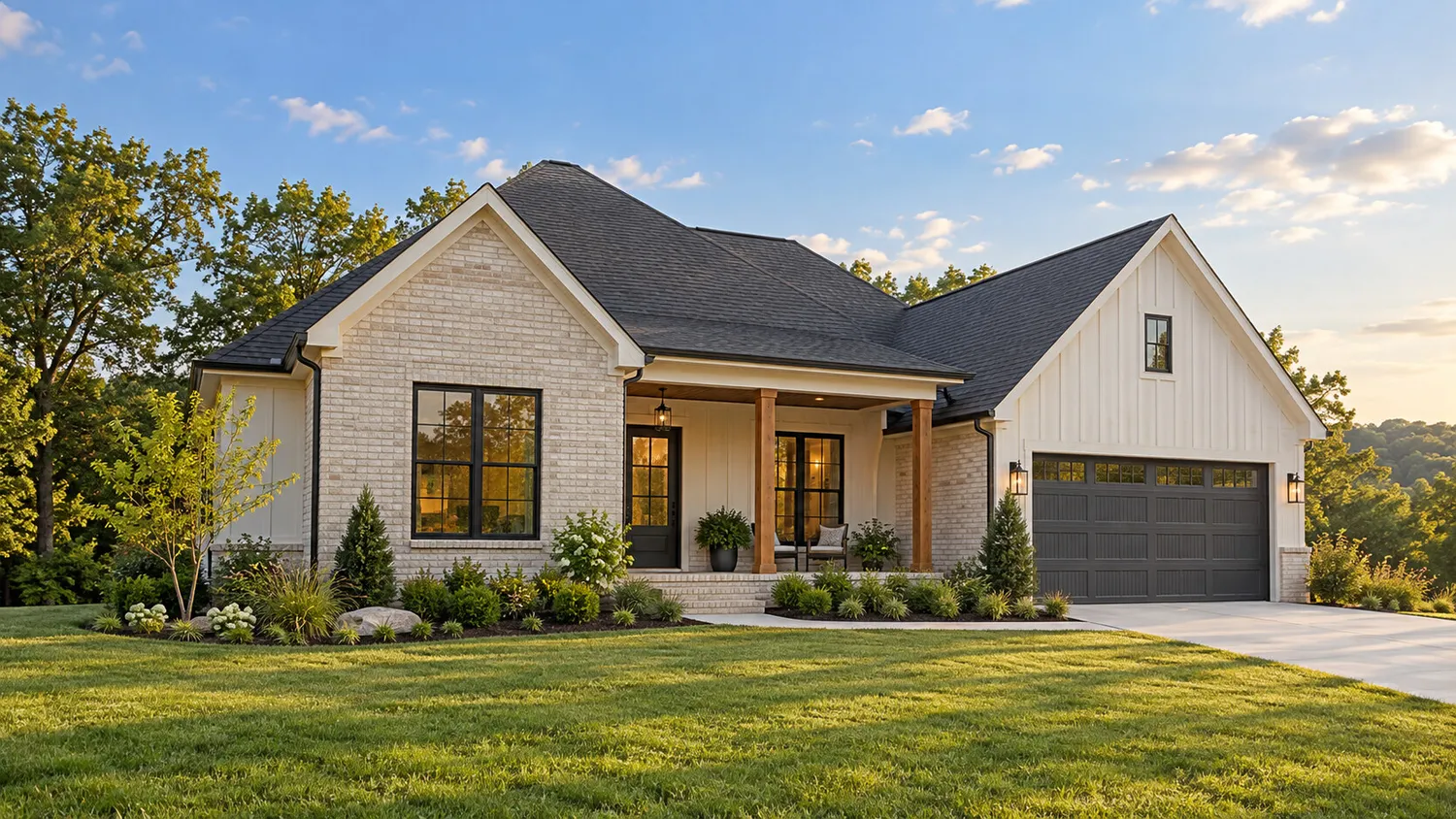
When you find a new home you like in Northwest Arkansas, an advertised monthly payment can give you a starting point. Before you decide whether it fits your budget, ask what that number includes, how long it lasts and what you would pay to own the finished home.
Whether you are comparing a home in Fayetteville, Springdale, Rogers, Bentonville or a nearby community, gather the same information for each address. The goal is to understand the cash you will need, the ongoing payment and the expenses you will handle after moving in.
Start with our new-construction home search to choose a few properties, then use the steps below to compare their costs.
Start with the exact home and written terms
Ask for a written price tied to the specific lot, floor plan and selections you would buy. Confirm whether the price includes the lot, upgrades, appliances, landscaping, fencing and any other items you expect to have at move-in. A model home can show choices that are priced separately.
Keep the builder’s incentive terms with that price. Record which homes qualify, when the offer expires, whether it requires a particular lender or closing provider, and whether it depends on closing by a certain date. Ask how a construction delay would affect the offer.
If you are buying a lot and financing construction separately, ask your lender for a construction-stage budget as well. A payment estimate for a completed home does not describe every cost of building it.
Find out what the advertised payment includes
Ask the lender to show the loan amount, down payment, loan type, term, interest rate, mortgage insurance and whether the rate is locked. When you have a Loan Estimate, review its Projected Payments section and the separate estimate for taxes, insurance and assessments.
The CFPB’s Loan Estimate guide explains these sections. Principal and interest repay the loan, while the total mortgage payment may also include mortgage insurance and an escrow payment for taxes and insurance. HOA or POA dues and other costs may be paid separately.
Put each expense in your budget once. If taxes and homeowners insurance are already included in the lender’s total payment through escrow, do not add those same amounts again.
Ask about taxes on the completed home
Look up the actual parcel and ask whether its current tax record reflects the finished house, partial construction or vacant land. An earlier bill can describe a different property from the one you are buying.
Benton County’s property-tax estimator provides a starting estimate, while the Washington County Assessor provides local assessment information. Use the county responsible for the address, and ask the assessor and lender what completed-home value, taxing district, assessment year and any applicable credit assumptions are being used.
Ask the lender directly, “Does this tax estimate reflect the completed home, and how might the escrow payment change when the assessment is updated?” Request the basis for the estimate in writing. Avoid using one subdivision’s bill, a seller’s tax amount or a single regional percentage as your long-term budget.
Price insurance and association costs for the address
Get a homeowners insurance quote for the actual home before relying on a payment estimate. Compare the coverage, replacement-cost terms, deductibles and exclusions, and ask the insurer whether the property needs separate flood coverage. A new-home discount, if available, is only one part of the quote.
For an HOA or POA, request the current dues schedule and governing documents. Ask what the dues cover, how often they are collected, and whether there are transfer fees, initial contributions, separate amenity charges or approved special assessments. Have the appropriate closing professional confirm other property-specific charges.
Convert annual or quarterly expenses to a monthly planning amount, but also note when the actual bill is due. Setting money aside each month does not change the payment deadline.
Compare the incentive with the full loan offer
A closing-cost credit, discount points and a temporary payment buydown work differently. Ask the lender to explain the benefit, the conditions and the costs in writing, then compare offers using the same purchase price, down payment, loan type and term.
If an offer includes a temporary buydown, ask for the amount you would pay during each stage and after the subsidy ends. Check the mortgage’s permanent terms as well. A temporarily reduced payment is not the figure to rely on for the entire time you own the home.
The CFPB’s explanation of points and lender credits is a useful companion when comparing upfront costs with the interest rate. Review the fees and cash needed alongside the monthly payment, and make sure the budget works without depending on a future refinance.
Keep closing cash and move-in spending separate
Ask the lender and closing professional to reconcile the down payment, closing costs, prepaid items, initial escrow funding, deposits already paid and applicable credits. The final cash-to-close figure should account for those items, rather than requiring you to add overlapping totals yourself.
Use the CFPB’s Closing Disclosure guide to review the final loan paperwork and compare it with your latest Loan Estimate. Ask about differences before signing.
Keep a separate move-in list for items outside that figure, such as moving, utility deposits, window coverings, appliances or yard work that the builder does not include. If the completion date could shift, discuss the cost of storage, temporary housing or overlapping payments before committing to a schedule.
Build one ownership-cost worksheet for every home
For each expense, record the amount, who supplied it, the date, how often it is paid and any assumptions still needing confirmation. Mark whether it is already included in escrow. Keep the written quotes and documents with the worksheet so you can update the same comparison when a figure changes.
Use these three groups:
· Before and at closing: money already paid, the lender’s current cash-to-close figure, and separate moving and move-in expenses. Ask how earlier deposits are credited so you do not count them twice.
· Ongoing ownership: principal and interest, mortgage insurance if applicable, completed-home property taxes, homeowners insurance, association dues, other applicable charges and utilities. Identify anything already included in the mortgage payment.
· Future needs: routine maintenance, repairs, replacement savings and money available for insurance deductibles or other unexpected costs.
Here is a hypothetical monthly example, using invented amounts only to show the arithmetic. These are not NWA averages, a lender quote or a recommended budget:
- Principal and interest: $2,100
- Homeowners insurance: $150
- Association dues: $50
- Housing subtotal: $2,680
- Utilities: $300
- Maintenance and replacement savings: $200
- Total monthly planning amount: $3,180
In this example, a principal-and-interest figure of $2,100 becomes a $3,180 monthly planning amount after the other listed items. Replace every invented amount with the estimates for your home. If your lender’s payment already includes some of these costs, start with that total and add only the items outside it.
Leave room for maintenance even when the home is new
Read the actual builder warranty before assuming a repair will be covered. Check the covered components, exclusions, deadlines, maintenance requirements and claim process. The FTC’s new-home warranty guide explains why the written terms matter.
Plan for routine upkeep and future replacements based on the home’s systems, yard and features. Discuss independent inspections and any construction-stage access with your agent and builder, and confirm the opportunities and deadlines in your agreement. A warranty and an inspection serve different purposes.
Compare the homes with your next step in mind
Once the figures are on the same basis, compare them alongside the floor plan, location, included features and expected completion date. Our home buyer guide can help you think through the wider purchase.
Send The Moldenhauer Group, RE/MAX Associates the addresses you are considering and the questions that are still open. We can help you organize the comparison and discuss the property details, while your lender, insurer, county assessor and closing professional confirm the figures in their areas.
Browse NWA new-construction homes
Talk with our team about a new build
This article is general planning information. Costs, financing, tax treatment and contract terms vary by property and buyer. Confirm the details with the appropriate professionals before making a purchase decision.